
Cervical cancer is one of the most preventable and treatable forms of cancer. Yet, that is not enough to keep it from affecting the lives of hundreds of thousands of women globally every year. According to the World Health Organization, cervical cancer affects around 660,000 women globally, making it the fourth most common cancer in women.4 The Centers for Disease Control and Prevention estimates that about 13,000 women are newly diagnosed with cervical cancer and about 4,000 die from it in the United States. 3 This is not happening because there is a lack of solutions. This is happening because a lack of awareness, access, and timely action exists. It has been proven that when the causes of cervical cancer are understood, warning signs are recognized, and prevention tools are utilized, there is a dramatic reduction in the number of women affected by cervical cancer and more lives are saved.
Understanding Cervical Cancer
So, what is cervical cancer? Cervical cancer develops in the cervix, the lower part of the uterus that connects to the vagina. In 95% of cervical cancer cases, a strain of human papillomavirus (HPV) that causes persistent infection has been identified as the cause. HPV is a common sexually transmitted infection that can affect the skin, genital area, anal area, and throat.4 Most infections clear on their own without causing harm. However, persistent HPV infections can cause abnormal cervical cell changes that can slowly progress to cancer without symptoms over time. When cervical abnormalities are identified early, treatment is highly effective and in some cases, prevent cervical cancer altogether.
Recognizing Warning Signs
So, what should you look out for? You should know that early cervical cancer may not cause symptoms. Once the cancer progresses, more advanced disease can present with:
- Unusual vaginal bleeding (between periods, after intercourse, or after menopause)
- Persistent pelvic or low back pain
- Pain during intercourse
- Unusual vaginal discharge
- Swelling of the legs
- Weight loss, fatigue, appetite loss
It is important to note that these symptoms do not always indicate cancer, but they should never be ignored. If you have any of these symptoms, see a health care professional right away.
Prevention Tools
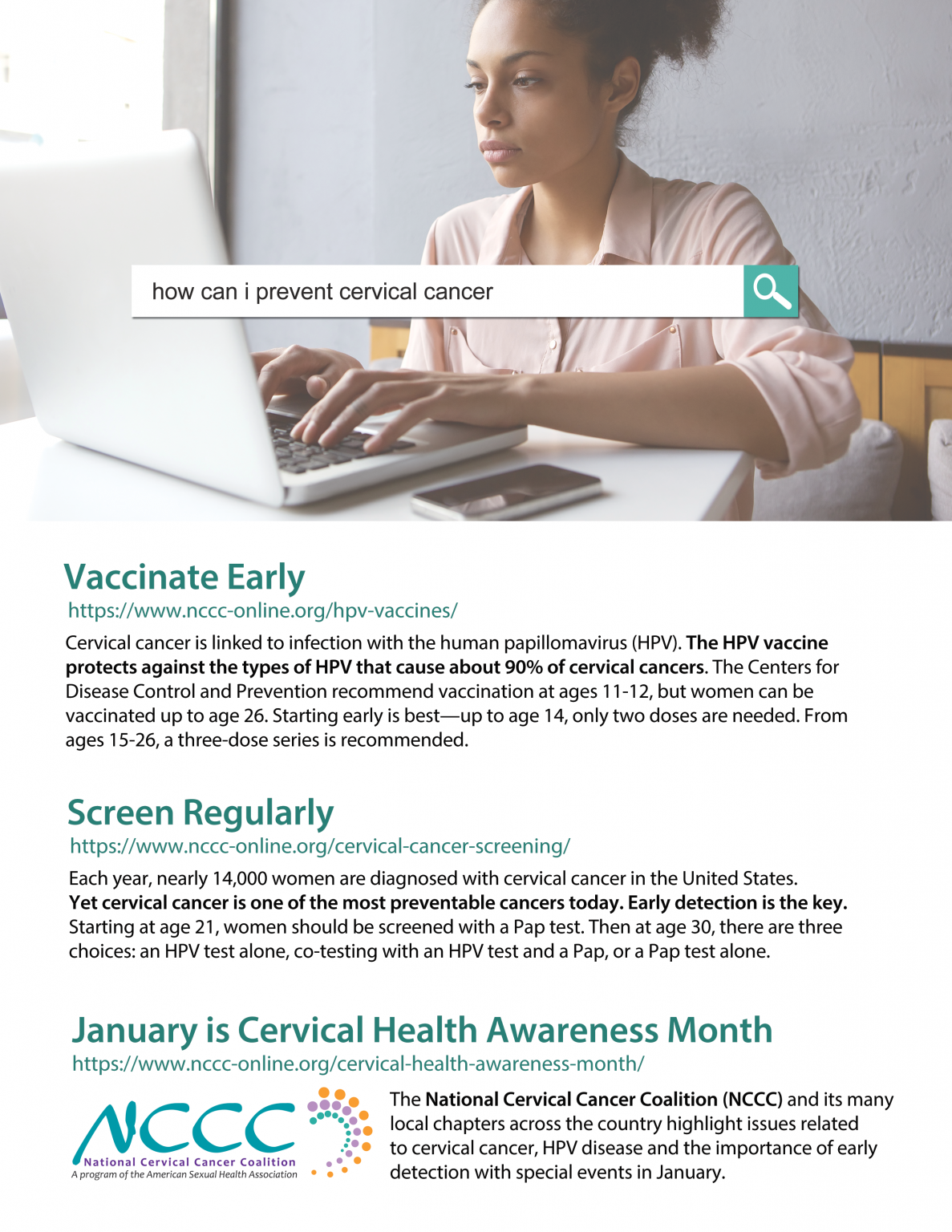
What can you do? Get screened or vaccinated or both. Screening and vaccination are among the proven prevention tools that can dramatically reduce the burden of cervical cancer and help to eliminate it altogether. Regular screening is one of the most effective tools for preventing cervical cancer. Pap tests and HPV tests are both used to screen for cervical cancer. Pap tests detect abnormal cervical cells before they develop into cancer. HPV tests identify high risk HPV types associated with cervical cancer. The American College of Obstetrics and Gynecology (ACOG) recommend women between the ages 21-65 receive pap tests every three years or HPV and HPV/Pap co-tests every 5 years for women ages 30-65. Women should seek advice from a health care provider as to which option is best for them.
HPV vaccination is another powerful prevention tool. The HPV protects against the most common high-risk HPV strains that cause persistent infection and are responsible for cervical cancer. It is most effective when it is given before a person is exposed to HPV, typically during adolescence. According to the CDC:
The HPV vaccine is recommended for preteens aged 11-12 but can be given starting at age 9. It can still provide benefits when administered later in life and is recommended for everyone through age 26 if they are not yet vaccinated. Additionally, the CDC indicates that although the HPV vaccine is not recommended for everyone over 26, it may be beneficial for some adults who are not vaccinated between the ages of 27 and 45 to receive the vaccine. This decision should be made after seeking advice from their health care provider. HPV vaccines prevent new HPV infections but does not treat existing infections or diseases.3
Effective Treatment
How is cervical cancer treated? When cervical cancer is detected early, treatment is highly effective. Treatment is determined by the type of cancer, the person’s health history, and the stage and size of the cancer. Treatment options include surgery, radiation, targeted therapy, and immunotherapy drugs used together or individually.
Next Steps
So, what now? Don’t wait. Know the warning signs. Get screened today. Speak with your doctor about whether vaccination is right for you. Begin or stick with your screening schedule. Seek help immediately if you experience any of the signs and symptoms listed above. To learn more, check out some of the resources provided by organizations working to eliminate cervical cancer in the Resource section.
Resources
American Cancer Society Cervical Cancer Fact Sheet
January is Cervical Health Awareness Month
References
- Cervical cancer fact sheet for health professionals. American Cancer Society. Updated November 2025. Accessed January 20, 2026. https://www.cancer.org/content/dam/cancer-org/cancer-control/en/booklets-flyers/cervical-cancer-fact-sheet.pdf
- Cervical cancer. Centers for Disease Control and Prevention. Published December 11, 2024. Accessed January 20, 2026. https://www.cdc.gov/cervical-cancer/prevention/index.html
- Cervical cancer. World Health Organization. December 2, 2025. Accessed January 20, 2026. https://www.who.int/news-room/fact-sheets/detail/cervical-cancer
- Updated cervical cancer screening guidelines. American College of Gynecology and Obstetrics. Updated April 2021. Accessed January 20, 2026. https://www.acog.org/clinical/clinical-guidance/practice-advisory/articles/2021/04/updated-cervical-cancer-screening-guidelines
 Public Health Matters
Leave a comment